In today’s fast-paced digital work environment, companies depend heavily on smart systems that streamline employee productivity, attendance tracking, and operational efficiency. One such system often discussed in the outsourcing and BPO industry is “Timewarp TaskUs.” While the name may sound futuristic, it represents a practical approach to managing time, tasks, and workforce performance within large-scale service organizations.
To understand its importance, we need to look beyond the buzzword and explore how it fits into real-world operations, especially in global outsourcing companies like TaskUs.
Table of Contents
ToggleWhat is Timewarp TaskUs?
Timewarp TaskUs is generally associated with internal workforce management and time-tracking systems used in large customer support and outsourcing environments. It helps monitor employee login hours, shift schedules, productivity metrics, and task completion in real time.
Instead of relying on manual attendance sheets or fragmented reporting systems, Timewarp acts as a centralized digital layer that ensures transparency and accuracy across teams.
In simpler terms, it’s like a digital control room that keeps track of who is working, what they are working on, and how efficiently tasks are being completed.
Why Systems Like Timewarp Matter in BPO Operations
Companies like TaskUs operate across multiple countries, handling thousands of employees working in shifts around the clock. Without an efficient system, managing such a workforce would become chaotic.
Timewarp-style systems help solve key operational challenges:
- Tracking distributed teams across different time zones
- Monitoring attendance with precision
- Reducing payroll errors
- Ensuring accountability in remote or hybrid setups
- Improving productivity insights for managers
A real-world scenario makes this clearer: imagine a customer support team spread across the Philippines, India, and Latin America handling live chat support 24/7. Without automated time tracking, coordinating shifts and ensuring fair workload distribution would be nearly impossible.
How Timewarp Functions in a Work Environment
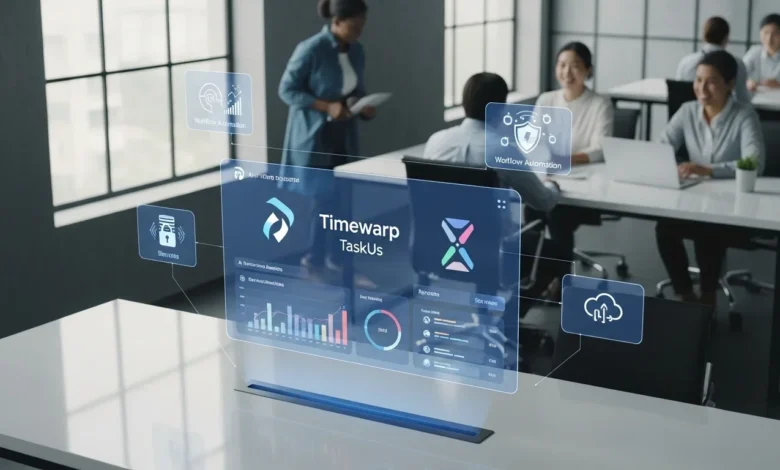
Although internal tools may vary, systems like Timewarp typically operate through integrated dashboards connected to employee login systems and project management platforms.
Here’s a simplified breakdown:
- Employees log in through a secure portal
- The system records active working hours automatically
- Tasks assigned during shifts are tracked
- Break times and idle time are monitored
- Managers receive real-time productivity reports
This creates a transparent workflow where both employees and supervisors can understand performance patterns without manual intervention.
Key Features of Timewarp TaskUs
The effectiveness of such systems lies in their features. Below are some commonly associated capabilities:
- Real-time attendance tracking
- Shift scheduling automation
- Performance analytics dashboards
- Task allocation monitoring
- Payroll integration support
- Idle-time detection
- Remote workforce compatibility
These features are especially valuable in outsourcing companies where efficiency directly impacts client satisfaction and operational cost.
Comparison: Timewarp vs Traditional Workforce Tracking
To better understand its value, let’s compare modern systems like Timewarp-style platforms with traditional tracking methods.
| Feature | Timewarp-Type System | Traditional Method |
|---|---|---|
| Attendance Tracking | Automated in real-time | Manual entry or punch cards |
| Accuracy | High precision | Prone to human error |
| Reporting | Instant dashboards | End-of-month reports |
| Remote Work Support | Fully supported | Limited or none |
| Productivity Insights | Detailed analytics | Minimal visibility |
| Scalability | Easily scalable | Difficult in large teams |
This comparison highlights why modern workforce tools have become essential in global outsourcing environments.
Workforce Efficiency in Action
In a large customer experience project, a multinational e-commerce company outsourced its support operations to a BPO provider. Initially, the team struggled with inconsistent shift reporting and unclear productivity metrics.
After implementing a Timewarp-like system, everything changed. Managers could now see live dashboards showing agent activity, average response times, and shift coverage gaps. Within a few weeks, response time improved significantly, and employee scheduling became far more efficient.
This type of transformation is exactly why such systems are widely adopted in companies like TaskUs.
Personal Experience Insight
I once observed a support team transition from manual spreadsheets to an automated time-tracking system, and the difference was striking—within days, confusion over shift swaps and attendance disputes dropped almost entirely.
Benefits of Using Timewarp TaskUs Systems
The advantages go beyond simple time tracking. These systems contribute to the overall health of an organization.
- Better workforce transparency
- Improved employee accountability
- Reduced administrative workload
- Enhanced client reporting accuracy
- Stronger operational control
- Faster decision-making for managers
Additionally, employees benefit from clearer schedules and fair performance evaluations, reducing workplace friction.
Challenges and Limitations
Despite its strengths, systems like Timewarp are not without challenges.
- Over-monitoring concerns among employees
- Dependency on stable internet connectivity
- Learning curve for new users
- Potential resistance to automation
Organizations must balance efficiency with employee trust to ensure smooth adoption.
Security and Data Privacy Considerations
Since workforce tracking systems handle sensitive employee data, security is a major concern. Companies typically implement:
- Encrypted login systems
- Role-based access controls
- Audit logs for transparency
- Compliance with data protection regulations
These measures help ensure that monitoring tools remain ethical and secure.
Best Practices for Effective Use
To get the most value from Timewarp-style systems, organizations should focus on:
- Transparent communication with employees
- Proper onboarding and training
- Avoiding excessive monitoring pressure
- Regular system audits and updates
- Aligning metrics with realistic performance goals
When used correctly, these systems can enhance productivity without harming workplace morale.
Also Read: 1.5f8-p1uzt Texture Guide for Realistic 3D Materials v2
Conclusion
Timewarp TaskUs represents more than just a tracking tool—it reflects how modern outsourcing companies manage complex, global workforces with precision and efficiency. By combining automation, analytics, and real-time visibility, such systems help organizations maintain high performance while supporting distributed teams.
As digital work continues to evolve, tools like Timewarp will likely become even more advanced, shaping the future of workforce management across industries.
FAQs
1. What is Timewarp TaskUs used for?
It is primarily used for tracking employee attendance, shift scheduling, and productivity monitoring in large-scale BPO environments.
2. Is Timewarp an external software?
No, it is generally considered an internal workforce management system used within organizations like TaskUs.
3. Does Timewarp track employee activity?
Yes, it typically monitors login hours, task activity, and idle time to ensure productivity insights.
4. Why is Timewarp important in outsourcing companies?
It helps manage large, distributed teams efficiently while reducing errors in scheduling and payroll.
5. Can employees access Timewarp data?
Access levels vary, but employees usually have limited visibility related to their own schedules and performance.